

5 Steps to manage
For professionals who go blank when put on the spot or overthink how they sounded. Open the free guide and use the strategies before your next high-stakes conversation.
Nerves at Work
Takes under 5 minutes. No email required.
Need help applying this to your real communication style?
Book a free 15-minute discovery call.
Simple ways to calm your nervous system before high-pressure conversations
Phrases that help you buy time without sounding unsure
Practical tools to speak more clearly when the stakes feel high
A better understanding of when coaching can help you apply these tools faster
What you’ll walk away with
Inside the guide
5 practical steps to help you manage communication nerves before high-pressure conversations.
Quick read with strategies you can use right away.
3 Building Blocks of Calmer, Clearer Communication
1. Get Clear on What You’re Actually Afraid Of
“Communication anxiety” is a big umbrella. Often, what you’re really afraid of is more specific, like:
“I’m afraid I’ll blank and look incompetent.”
“I’m afraid I’ll ramble and waste everyone’s time.”
“I’m afraid I’ll sound too emotional or not confident enough.”
“I’m afraid people will judge my accent, pacing, or word choice.”
Once you name the actual fear, you can match it with the right strategy. For example:
Fear of blanking → structure + prompts
Fear of rambling → simple frameworks to organize thoughts
Fear of voice/tone → delivery practice: rate, volume, pauses
Fear of judgment → cognitive reframing + nervous system regulation
Try writing down the 1–2 most common “what if” thoughts you have before a stressful communication situation. Those are your starting points.
2. Regulate Your Nervous System Before You Speak
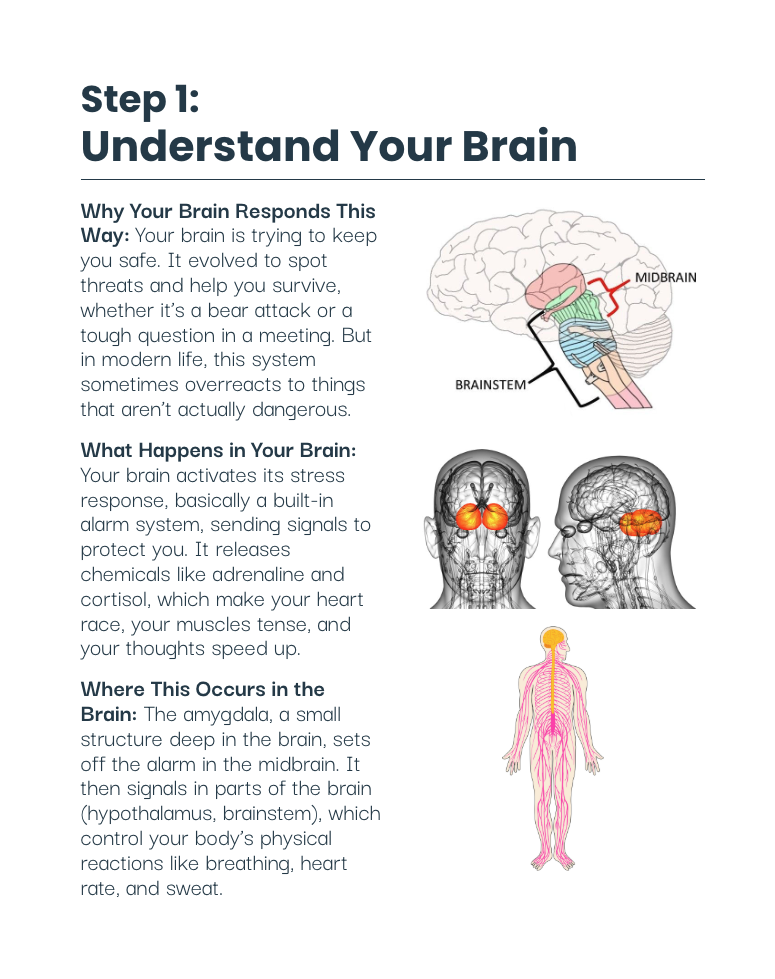
Communication anxiety isn’t just “in your head.” Your nervous system plays a huge role:
Heart racing
Shaky or tight voice
Dry mouth
Thoughts speeding up or freezing
Simple pre-communication regulation strategies:
Box breathing: Inhale for 4, hold 4, exhale 6, hold 2. Repeat a few times.
Exhale-first breathing: Long, slow exhale before your first word to soften your tone and reduce tension.
Grounding: Feel your feet on the floor, notice a specific color in the room, or gently press your fingers together.
This doesn’t have to take long; 30 to 90 seconds of intentional regulation can dramatically change how you sound and feel.
3. Reduce Cognitive Load in the Moment
If you’re neurodivergent (ADHD, autism, etc.) or under a lot of stress, your brain may already be at its limit before you even start talking.
To reduce cognitive load in the workplace:
Keep fewer tabs open (literally and figuratively) before important meetings.
Use brief notes you can glance at rather than holding everything in your head.
Limit multitasking—don’t check email or Slack while you’re about to present.
Ask for visual supports (slides, shared docs) to anchor your thoughts.
Less mental clutter = more bandwidth for clear communication.