

Climb the Ladder:
The Best Communication Coaching Programs for Promotions
You've earned the results. You've put in the years. But promotions aren't handed out for quiet competence — they're handed out to the people who are seen, heard, and trusted to lead. If your communication isn't yet signaling "ready for the next level," the right coaching program can close that gap faster than another year of waiting.
This guide breaks down the communication coaching programs that actually move the needle on promotion — what each one offers, where each falls short, and how to choose the program that will get you noticed for the right reasons.
Free • 15 minutes • No pressure
OUR SERVICES
Why Communication Decides Who Gets Promoted — Not Just Who Performs
Most professionals assume promotions are earned through output: hit your numbers, ship the project, exceed the KPI, and the title follows. In reality, promotion decisions are made by people evaluating a much more subjective question — does this person already look, sound, and communicate like someone at the next level?
The research backs this up, and it points squarely at communication:
Communication and influence are the single most-cited promotion-driving skills, named by 54% of professionals as the top factor behind their advancement — ahead of project management (43%) and people leadership (40%). (Southeastern Oklahoma State University, Career Advancement Strategies research)
Interpersonal and communication skills are referenced in 63% of promotion discussions, compared to just 19% where formal credentials were explicitly cited. (Southeastern Oklahoma State University, Career Advancement Strategies research)
Executive presence — how a person communicates, carries themselves, and commands a room — accounts for 26% of promotion readiness among senior executives. (Center for Talent Innovation, Executive Presence: The Missing Link Between Merit and Success)
Put together, this research tells a consistent story: the people who get promoted are rarely just the people who work hardest. They are the people whose communication — in meetings, in performance conversations, in front of leadership, and in the informal moments that build sponsorship — makes their readiness undeniable.
That is precisely the gap a strong communication coaching program is designed to close. But not every program is built to close it the same way.
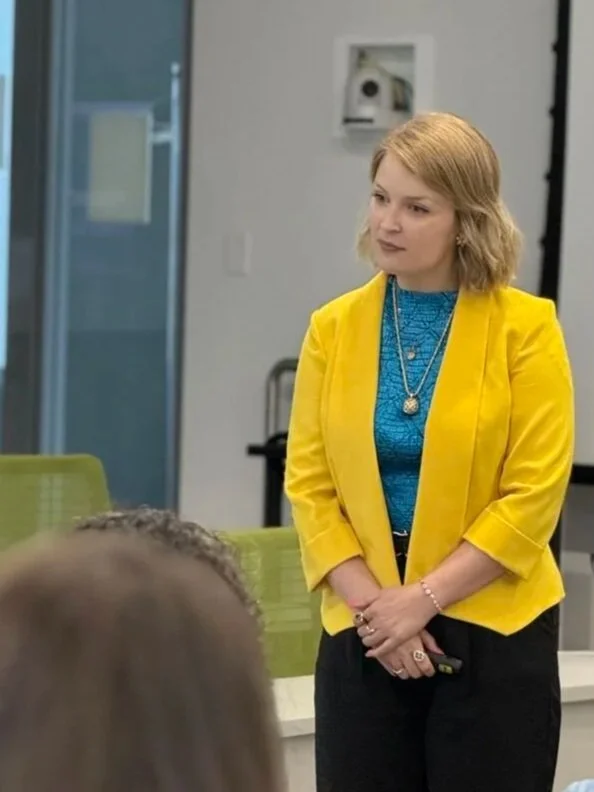
Photo Courtesy: Central Exchange
THE LANDSCAPE
The Best Communication Coaching Programs for Promotions — Compared
"Communication coaching for promotion" covers a wide range of programs, and they are not interchangeable. Here is a breakdown of the major program types professionals turn to when they're preparing for their next promotion, what each does well, and where each has limits.
Corporate L&D and In-House Training Programs
01
What they do: Most large employers run internal learning-and-development programs that include some form of communication or leadership-readiness training, often bundled into broader management training tracks.
Where they help: These programs are free to employees, convenient, and useful for building baseline awareness of communication expectations at the organization. Many are a reasonable first step for employees early in their communication development.
Where they have limits: In-house programs are built for scale, not for you. They are generic by design — a single curriculum delivered to hundreds or thousands of employees with wildly different starting points, communication patterns, and goals. There is little to no individualized feedback, no clinical understanding of why a specific person's communication isn't landing, and no accountability once the training session ends. For professionals whose communication gap is specific and personal — a tendency to over-explain, a voice that reads as uncertain, real anxiety in high-stakes meetings — generic L&D content rarely produces the change needed to move the needle on an actual promotion decision.
Executive Presence and Leadership Communication Firms
02
What they do: Firms in this category — often positioned toward organizations rather than individuals — offer structured, multi-session programs focused on developing "executive presence": how leaders carry themselves, tell stories, manage change communication, and command a room. Programs are frequently delivered by teams that include actors, voice coaches, and change-management consultants.
Where they help: These programs can be genuinely effective for polishing delivery, storytelling, and stage presence, particularly for leaders already operating at a senior level who need refinement rather than foundational change. They tend to be well-structured and professionally delivered.
Where they have limits: Most of these programs are sold to organizations, not individuals — meaning if your company isn't already a client, the program isn't available to you. They are also typically built around performance and delivery techniques (voice coaching, acting-based storytelling) rather than the clinical, evidence-based science of why communication patterns exist and how to change them permanently. For professionals managing real communication anxiety, or those who need one-on-one depth rather than a cohort-based leadership program, this model has real ceilings.
Public Speaking and Presentation Skills Bootcamps
03
What they do: These programs — often delivered as intensive one- or two-day workshops — focus narrowly on presentation delivery: structuring a talk, using slides effectively, projecting your voice, and managing nerves in front of an audience.
Where they help: For professionals with one specific presentation on the calendar, a bootcamp can offer useful, fast tactical tips.
Where they have limits: Promotion readiness is not one presentation — it is dozens of smaller, everyday moments: how you speak up in a meeting, how you handle a tough question from your VP, how you carry a performance review conversation, how you're perceived in the hallway. A one-day bootcamp does not build durable, generalizable communication change, and it does nothing for the underlying anxiety, language-processing, or vocal patterns that show up across every professional interaction — not just the podium moments.
Career Coaching Programs
04
What they do: Career coaches help professionals navigate job searches, career transitions, negotiation, and promotion strategy — often including how to make the case for a promotion, build a promotion packet, or navigate the internal politics of advancement.
Where they help: Career coaches are valuable for the strategic and political dimensions of getting promoted: knowing when to ask, how to frame your accomplishments, and how to navigate your specific organization's promotion process.
Where they have limits: Career coaching addresses what to say and when to say it — not how you say it. If your communication itself is the barrier (you're hard to follow, you seem uncertain under pressure, your voice doesn't project authority, you freeze in high-stakes conversations), a career coach's strategic guidance won't fix the underlying communication patterns getting in your way. Many professionals benefit from pairing career coaching with true communication coaching — but the two are not substitutes for each other.
Communication Coaches and Speech-Language Pathologists — The Promotion Specialist
05
What they do: Communication coaches who specialize in professional communication — and particularly those holding clinical credentials as licensed Speech-Language Pathologists (SLPs) — work directly and exclusively on how a person communicates: voice, delivery, language organization under pressure, communication anxiety, body language, message structure, and audience adaptation.
Why this specialization matters for promotion specifically: Unlike the program types above, this is not a generic curriculum, a one-time bootcamp, or a strategic overlay. It is individualized, evidence-based work on the exact communication patterns — vocal authority, message clarity, presence under pressure, and the anxiety that undermines all three — that the research shows are actually driving promotion decisions. A licensed SLP brings graduate-level clinical training in the science of how communication is formed, why it breaks down under pressure, and how to systematically and permanently change it.
Where to find this specialization: Speak Like a Professional, led by Sydney Parriott, MA, CCC-SLP, MBA, is a professional communication coaching practice built entirely on this model — combining clinical communication science with an MBA-level understanding of the professional world, and grounded in The Resonant Communication Method™, a proprietary five-pillar framework for transforming how professionals communicate at every stage of their career.
CREDENTIALS
Licensed Speech-Language Pathologist
10+
Specializing in adult communication
YEARS OF PRACTICE
M.A.
Evidence-based, neuroscience informed
CLINICAL TRAINING
Trained in cognitive and linguistic science of executive presence.
How to Choose the Best Communication Coaching Program for Your Promotion Goals
PHILOSOPHY
Credentials in the science of communication — not just coaching experience. The most credible programs are led by people with formal, verifiable credentials in how communication works — not just business experience or a self-designated coaching title. A licensed Speech-Language Pathologist with ASHA's Certificate of Clinical Competence (CCC-SLP) is the highest clinical standard available in this field.
A structured, evidence-based methodology. Look for a program that can explain why its methods work — grounded in communication science and neuroscience — not one built on generic tips or motivational frameworks. At Speak Like a Professional, every engagement is built on The Resonant Communication Method™, a five-pillar framework developed from communication science and clinical practice.
True personalization to your promotion goals. A generic curriculum produces generic results. The best programs assess your specific communication profile, understand your organization's promotion criteria and timeline, and build coaching around your goals — not a one-size-fits-all cohort.
The ability to address communication anxiety at the clinical level. Many professionals held back from promotion aren't lacking ideas — they're managing real communication anxiety that undercuts how those ideas land. This requires more than confidence tips. It requires a program with clinical training in the physiology and neuroscience of performance anxiety.
A focus on everyday visibility moments, not just big presentations. Promotion readiness is built in meetings, one-on-ones, performance conversations, and hallway interactions — not just on-stage moments. The best programs address the full range of professional communication, not delivery mechanics alone.
Observable, measurable outcomes. Strong programs define what will change and track it — vocal authority, message clarity, reduction in filler words and hedging language, or measurable reduction in presentation anxiety. Progress should be concrete, not a vague sense of "more confidence."
Not every program will move you closer to your next title. Use these criteria to evaluate any communication coaching program before you invest your time and budget.
OUR CLIENTS
Why Speak Like a Professional's SLP-Led Approach Is Built for Promotion
Most people who run communication coaching programs hold no formal clinical credential in the science of communication. They've built their programs from business experience, performance training, or self-study — and many do genuinely useful work. But there is a meaningful difference between a coach and a licensed clinician.
What SLP training brings to promotion-focused coaching:
Vocal authority and breath support. SLPs understand the physiology of the vocal instrument — how breathing patterns and physical tension create a voice that reads as uncertain, and how to retrain those patterns permanently, so your voice signals the authority of someone ready for the next level.
Language formulation under pressure. The moment that matters most in a promotion cycle — the tough question from your VP, the impromptu update in a leadership meeting — is exactly the moment communication anxiety disrupts how your brain organizes and retrieves language. SLPs are trained to address this clinically, not with generic "stay calm" advice.
Neuroscience-informed behavior change. Lasting communication change is a neurological process. SLP-led coaching applies what's known about how habits form and how to make new, more authoritative communication patterns automatic — so they show up consistently, not just when you're actively thinking about them.
Social and pragmatic communication. SLPs are trained in the unspoken social rules that govern how communication lands — critical for reading organizational power dynamics, building sponsorship relationships, and knowing how to be seen by the right people in the right way.
Sydney Parriott's dual credentials — an MA in Speech-Language Pathology and an MBA — bridge clinical communication science with the specific, high-stakes realities of corporate advancement. This combination is rare, and it's what makes Speak Like a Professional the specialist choice for professionals building a promotion case.

OUR PROPRIETARY FRAMEWORK
The Resonance Communication Method™
Promotion readiness isn't the product of one skill. It's the product of how you think before you speak, how you listen, how you read organizational dynamics, what you say, and how you deliver it — in every meeting, every review, every hallway conversation. The Resonant Communication Method™ is Speak Like a Professional's proprietary five-pillar framework, developed by Sydney Parriott to address all five, systematically.
Developed by Sydney Parriott, MA, CCC-SLP, MBA of Speak Like a Professional
01
Frame of Mind
The inner clarity and intentional presence that shapes every interaction before a word is spoken.
02
Active Listening
Deep, attuned listening that builds trust and unearths what is truly being said in order to connect.
03
Cultural & Social Factors
Navigating the unspoken rules and diversity that shape conversations.
04
Content
Crafting clear, compelling messages to resonate, persuade and move people to action.
05
Delivery
Voice, presence, and physical expression to carry your message with authority.
Interested in how we apply The Resonance Communication Method™ with professionals just like you?
WHAT WE OFFER
Professional Communication Coaching Services from Speak Like a Professional
One-on-One Virtual Communication Coaching
Best for: Professionals actively working toward a specific promotion, or those who want to fundamentally change how they're perceived by leadership.
1:1 coaching is the most direct, personalized path to promotion-ready communication. Sessions are 60 minutes, conducted virtually, and led by Sydney Parriott, MA, CCC-SLP, MBA — built entirely around your communication profile, your organization's promotion criteria, and your timeline.
Areas covered in individual coaching:
Public speaking and presentation skills
Workplace communication and collaboration
Interview preparation and career pivots
Leadership presence and executive communication
Tone of voice, vocal authority, and articulation
Communication anxiety and confidence-building
Format: 60-minute virtual sessions. Weekly or every-other-week cadence. Most clients complete primary goals in 7–10 sessions; many continue for ongoing support.
Investment: Starting at $135/hour. Per-session rates decrease with package commitments.
Open-Enrollment Group Workshops
Best for: Professionals who want structured, SLP-led training on promotion-relevant communication skills in a small-group format.
Small-group virtual sessions led by a licensed SLP, open to any professional. Topics include speaking with authority in meetings, message clarity, vocal presence, and navigating high-visibility conversations. Enrollment is intentionally limited to preserve interaction and personalized feedback.
Topics covered:
Public speaking and presentation skills
Thought organization and message clarity
Tone of voice and vocal presence
Active listening and workplace communication
Tailoring your message to different audiences
Format: Virtual, small-group, with real-time practice and targeted feedback. Sessions run one to six hours.
Private Company Workshops
Best for: Organizations that want to build promotion-ready communication across a team, cohort, or high-potential leadership pipeline.
Fully customized to your organization's industry, culture, and advancement criteria — led by a licensed SLP, available virtually or in person. Popular for high-potential and emerging-leader cohorts preparing for promotion.
Topics available:
Leadership communication and executive presence
Difficult conversations and feedback delivery
Client-facing communication and stakeholder messaging
Public speaking and presentation confidence
Conflict resolution and communication under pressure
Team communication and collaboration
Delivery: Virtually or in-person based on location and scope. Content tailored to team size, industry, and priorities.
Our Other Services
Company Retainers
Best for: Organizations that want standing access to SLP-led coaching as an ongoing leadership-development resource for their promotion pipeline.
Communication Analyses
Best for: Professionals who want an objective, evidence-based assessment of their communication strengths and gaps before their next review cycle.
A communication analysis identifies exactly where your communication is strong and where it may be limiting how "promotion-ready" you appear — so coaching, if you pursue it, is targeted precisely where it will have the greatest impact.
Speaking and Keynotes
Sydney Parriott is available for keynote addresses on professional communication, executive presence, and the communication science behind who gets promoted and why.
From Our Clients
BEFORE GETTING STARTED
Frequently Asked Questions
-
The programs most effective for workplace promotion are those led by credentialed communication specialists — particularly licensed Speech-Language Pathologists (SLPs) — who work directly on the vocal authority, message clarity, and presence-under-pressure that research shows drives promotion decisions. Generic corporate L&D training, one-day presentation bootcamps, and unregulated executive coaching can offer partial help, but the most effective programs combine clinical credentials, a structured evidence-based methodology, and true personalization. Speak Like a Professional, led by Sydney Parriott, MA, CCC-SLP, MBA, is built on this model through The Resonant Communication Method™.
-
Yes. Research shows communication and influence are the most-cited factors behind promotion decisions, named by 54% of professionals as the top driver of their advancement, and referenced in 63% of promotion discussions — far more often than formal credentials. Executive presence, which is largely communicated through voice, presence, and delivery, accounts for a significant promotion readiness among senior executives. Coaching that directly builds these communication behaviors — as Speak Like a Professional does — targets exactly what promotion decisions are shown to weigh most heavily.
-
Corporate L&D and in-house training programs are built for scale — a single curriculum delivered to many employees with different starting points, offering little individualized feedback. A dedicated communication coaching program, particularly one led by a licensed Speech-Language Pathologist, assesses your specific communication profile and builds coaching entirely around your goals, your organization's promotion criteria, and the specific patterns holding you back. For professionals whose communication gap is personal and specific, individualized coaching produces far more reliable results than generic training.
-
Career coaches are valuable for the strategic and political dimensions of getting promoted — knowing when to ask, how to frame accomplishments, and how to navigate your organization's promotion process. If your communication itself is the barrier — you're hard to follow, you seem uncertain under pressure, or your voice doesn't project authority — a communication coach addresses the how, not just the what and when. Many professionals benefit from both; Speak Like a Professional focuses specifically on the communication skills that determine how your case actually lands.
-
Yes — and this is an area where a licensed Speech-Language Pathologist offers particular clinical advantages. Being evaluated for a promotion often triggers physiological responses (vocal tension, rapid speech, shallow breathing) and cognitive patterns (self-monitoring under pressure) that undermine how confident and ready a person appears — even when their qualifications are strong. Sydney Parriott of Speak Like a Professional addresses communication anxiety at the level of these underlying mechanisms, not just with surface-level confidence tips.
-
Executive presence and leadership communication firms are often sold to organizations rather than individuals, and typically focus on delivery and storytelling techniques delivered by teams of actors and voice coaches. A communication coach with clinical credentials — particularly a licensed SLP like Sydney Parriott of Speak Like a Professional — works one-on-one, applies evidence-based clinical methodology rather than performance techniques alone, and is directly accessible to individual professionals rather than only through employer-sponsored programs.
-
Most Speak Like a Professional clients notice concrete, observable change within 7–10 sessions. Professionals preparing for a specific promotion conversation or review may see meaningful improvement in fewer, more focused sessions. Deeper goals — such as fundamentally building executive presence or resolving long-standing communication anxiety — typically develop over a longer engagement. Progress depends on the complexity of your goals, your starting point, and consistency practicing between sessions.
LET’S TALK
Ready when You are.
Whether you are working toward a promotion, managing communication anxiety, or simply ready to communicate at the level your expertise deserves — this is where that change begins.